New record for dam removal in Europe with over 600 barriers dismantled
-
Press Release
-
Freshwaters
The dam removal movement has once again broken records in Europe with at least 603 river barriers removed in 2025. This unprecedented effort reconnected over 3,740 km of rivers across the continent – strengthening climate resilience, enhancing water and food security, boosting biodiversity, and accelerating the recovery of freshwater ecosystems.
Published today, the Dam Removal Europe 2025 report highlights the continued growth and impact of barrier removals. For the fifth consecutive year, a new record has been set, surpassing the previous high of 542 removals in 2024 by 11%.
The success of the dam removal movement is based on a growing recognition that healthy rivers are critical natural infrastructure – living systems that provide flood protection, water security, biodiversity and climate resilience. People increasingly understand that obsolete dams do not need to stay forever: they can – and should – be removed to restore rivers and benefit people, nature and climate.
Chris Baker, Director of Wetlands International Europe
This sustained upward trend reflects a rapidly expanding movement, with removals showing a sixfold increase since the first continental count in 2020 (Figure 1). Two additional countries officially removed their first river barriers in 2025 – Iceland and North Macedonia – marking their entry into the dam removal movement and bringing the total number of participating countries to 29.
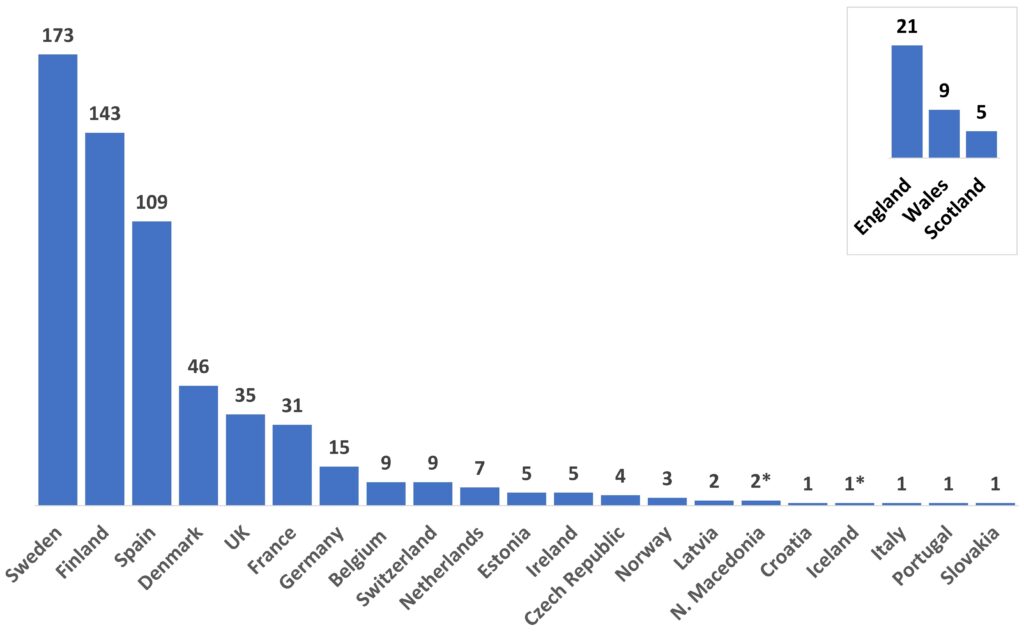
For the first time, Sweden was the trailblazer, with at least 173 barrier removals, followed by Finland and Spain, demonstrating how national commitment and coordinated action can rapidly accelerate progress.
The majority of barriers removed in 2025 were small, obsolete structures such as culverts and weirs. These removals are often highly cost-effective and, when carried out at scale, deliver substantial cumulative benefits. Sweden in particular removed several timber dams, legacy of Sweden’s long history of industrial-scale forestry, which saw many rivers channelised and dammed to enable logs to float downstream.
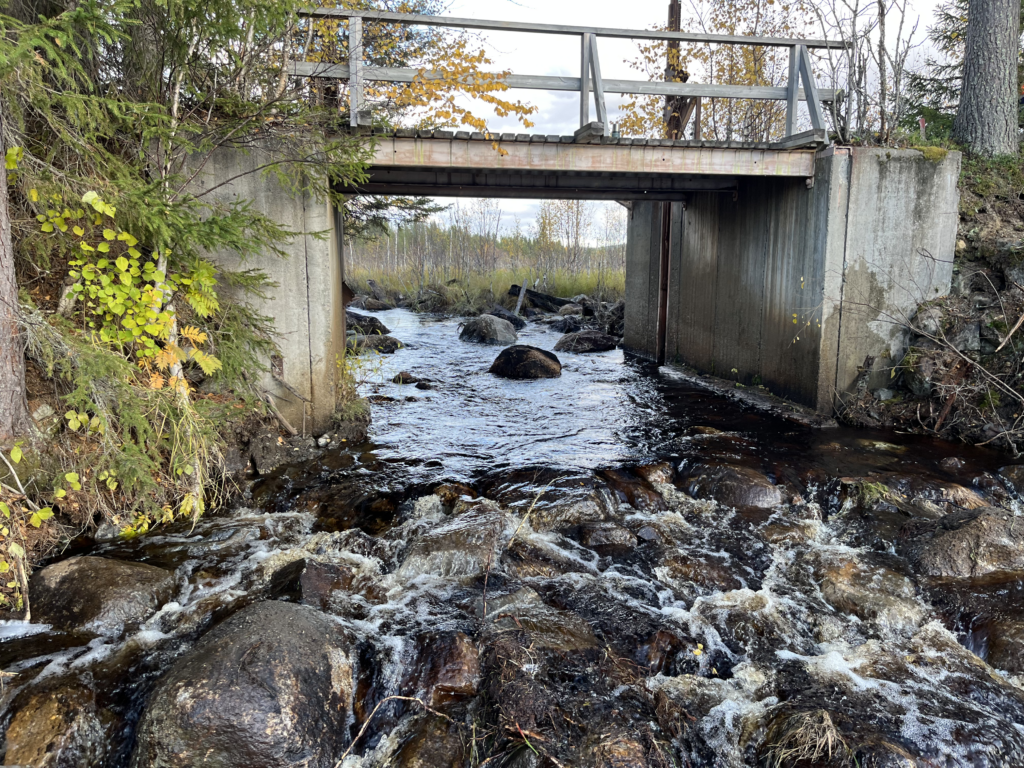
Europe’s rivers remain heavily fragmented, with over 1.2 million barriers – including dams, weirs and culverts – disrupting natural processes. Many of these structures are obsolete, yet they continue to block the flow of water, sediments and nutrients, and prevent the movement of species.
This fragmentation contributes significantly to ecosystem degradation and has played a major role in the dramatic decline of freshwater biodiversity, with 42% of Europe’s freshwater fishes being classified as threatened with extinction, according to a recent report by the European Commission.
Europe’s rivers are fragmented by an estimated 1.2 million barriers – and more than 150,000 of them are already considered obsolete. That makes barrier removal one of the biggest ecological ‘easy wins’ available today. These obsolete barriers no longer provide any benefits, yet they continue to degrade rivers every day they remain standing.
Chris Baker, Director of Wetlands International Europe
This record-breaking year also reinforces the importance of barrier removal in achieving Europe’s broader environmental goals. The EU Nature Restoration Law, which entered into force in 2024, includes a target to restore at least 25,000 km of rivers to a free-flowing state by 2030. Barrier removal remains one of the most effective tools to meet this target. At the same time, these efforts contribute directly to global ambitions under the Freshwater Challenge, which aims to restore 300,000 km of degraded rivers worldwide by 2030.
With momentum continuing to build, 2025 marks another milestone year for river restoration in Europe demonstrating that large-scale change is not only possible, but already well underway.