
Using horses for restoring wetlands on the Aquatic Warbler flyway
-
Nature based solutions
-
AWOM
-
Biodiversity - Flyways
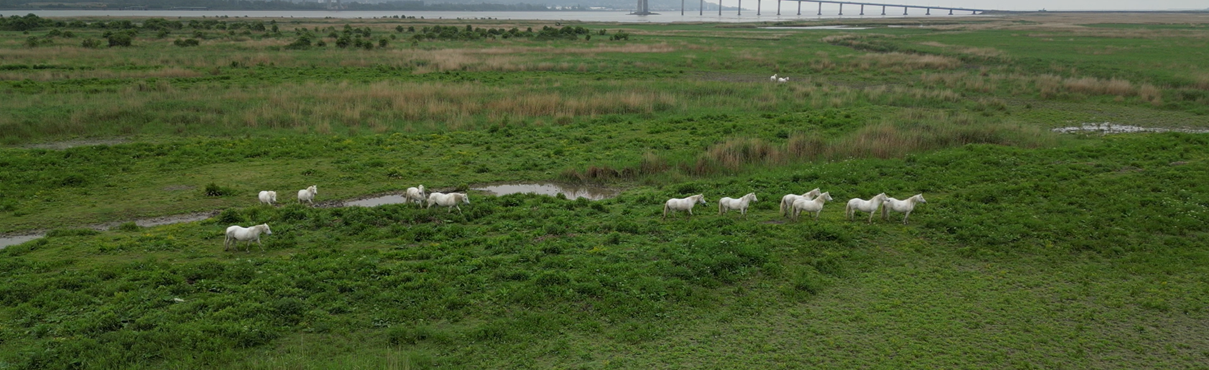
If you walk around the Seine Estuary Nature Reserve in France, you might see some horses and cows hanging there freely. They are not there by chance but for a very specific reason, called eco-grazing.

The objective of eco-grazing within the Seine Estuary Nature Reserve is to use large domestic herbivores (cattle and horses) to maintain and restore habitats, ecotones and forest edges.
A total of 237 hectares are managed by the LIFE AWOM partner Maison de l’Estuaire, using eco-grazing in the Seine Estuary Nature Reserve. This wide wetland site includes a variety of habitats, including reed beds, wet meadows, woodland and vegetated areas around water bodies. In several areas of the nature reserve, grazing management is the most suitable approach for achieving the objectives of maintenance, habitat restoration and improving the carrying capacity for birdlife. However, other areas present constraints that preclude their use for agricultural purposes: the need to minimise disturbance, difficult access, water levels, salinity, etc. This justifies the use of eco-grazing there.
This management approach yields very good results in terms of maintaining and improving wetlands habitats without disturbing endangered species stoping there during their migration such as the Aquatic Warbler, provided it is carried out on a large scale.
Maison de l’Estuaire holds a herd of 52 horses (Camargue horses) and 9 cows (Highland cattle).
Gathering 14 organisations from Belgium, France, Spain, Portugal and Senegal, “Aquatic Warblers on the Move” (AWOM) is the first multi-country LIFE project aiming to restore the Aquatic Warbler staging and wintering areas.