

A European meeting for goose conservation celebrates its 10th anniversary
-
Biodiversity - Flyways
Many migratory geese populations have declined over the last century due to overhunting and habitat loss. With recent conservation and restoration efforts, some of these populations have managed to successfully grow.
These steadily rising goose populations have created new issues that must be resolved. This includes millions in damage to agricultural crops, conflict between animals and farmers, and potential risks to aviation. These successful efforts have highlighted that conservation, and population management is a consistent and ongoing process, requiring continuous monitoring.
Groups such as the European Goose Management International Working Group (EGM IWG) have made it their mission to ensure the continued protection of Geese populations across Europe.
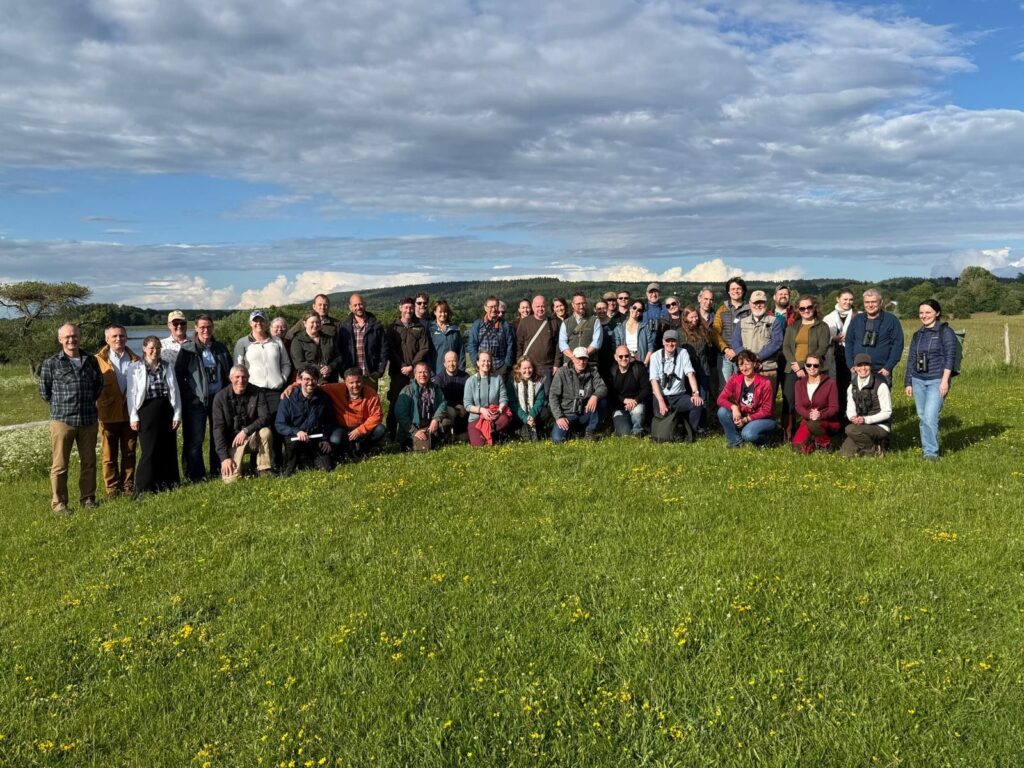
The 11th meeting of the EGM IWG occurred this past June in Skövde, Sweden. This meeting marked a special milestone in the group’s history, being the 10th anniversary of the European Goose Management Platform (EGMP).
The EGMP was founded in Paris 2016 as part of the African-Eurasian Migratory Waterbirds Agreement (AEWA). The EGM IWG functions as the decision-making power and coordinators of the EGMP.
The group brings together stakeholders from 15 countries, alongside the European Commission, to work on protecting global geese populations. This includes government agencies, scientists, NGO’s, hunting organisations, and farmers. It is a continuous showcase of successful international cooperation and conservation management.
These meetings involve presentations on technical topics, including population trends, monitoring data, redistribution maps, and harvest numbers, and any other new scientific research from the past year. This ensures that all members are on the same page about the state of geese populations. With this knowledge, stakeholders can have further discussions on population management techniques that should be implemented across the continent.
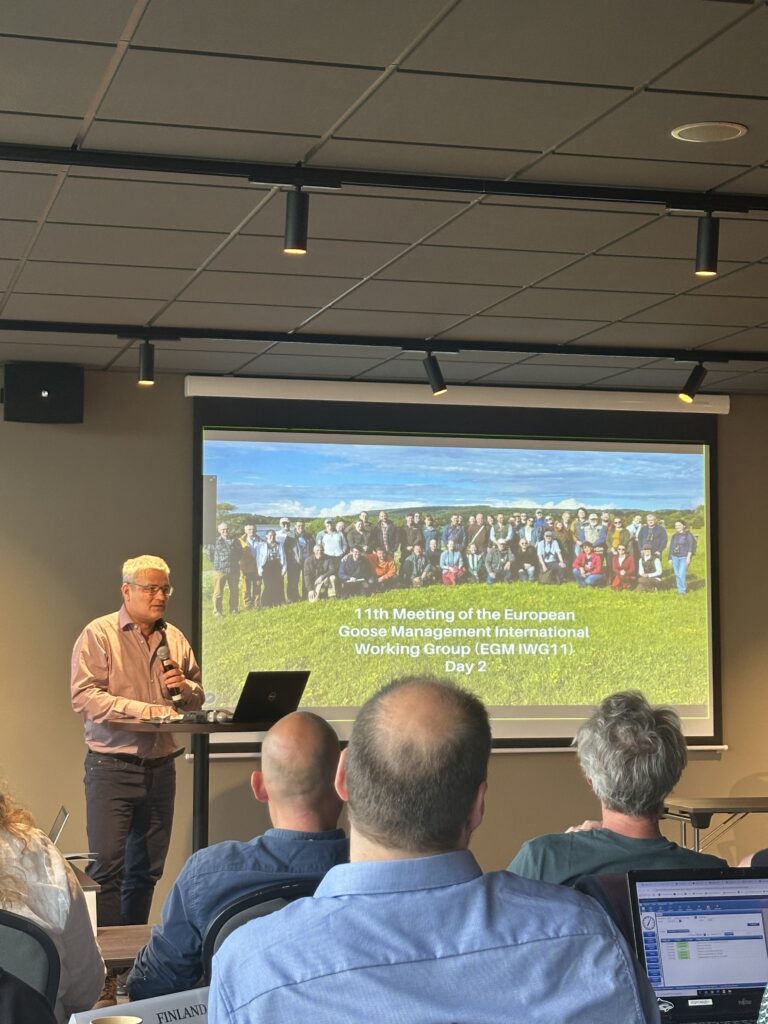
Wetlands International Europe at EGM IWG11
Wetlands International Europe’s Biodiversity Manager, Szabolcs, has been involved with the EGMP since its first meeting. Szabolcs attended alongside Luca, our Junior Technical Officer for Waterbirds. He was invited to give a talk this year, providing an observers’ reflection on the past decade of EGMP’s collaborative efforts. He noted that the EGMP has become streamlined, with much progress made in developing monitoring frameworks, population assessments, and adaptive management approaches for several populations over the past 10 years. He concluded that the EGMP is a strong example of evidence based international cooperation and collaboration.
Attending as a member, we provided perspectives on flyways, insights from the International Waterbird Census, scientific expertise, and a conservation-based perspective. Across this meeting, we worked to affirm to partnering groups that healthy populations depend on healthy landscapes and ecosystems (particularly wetlands and peatlands).
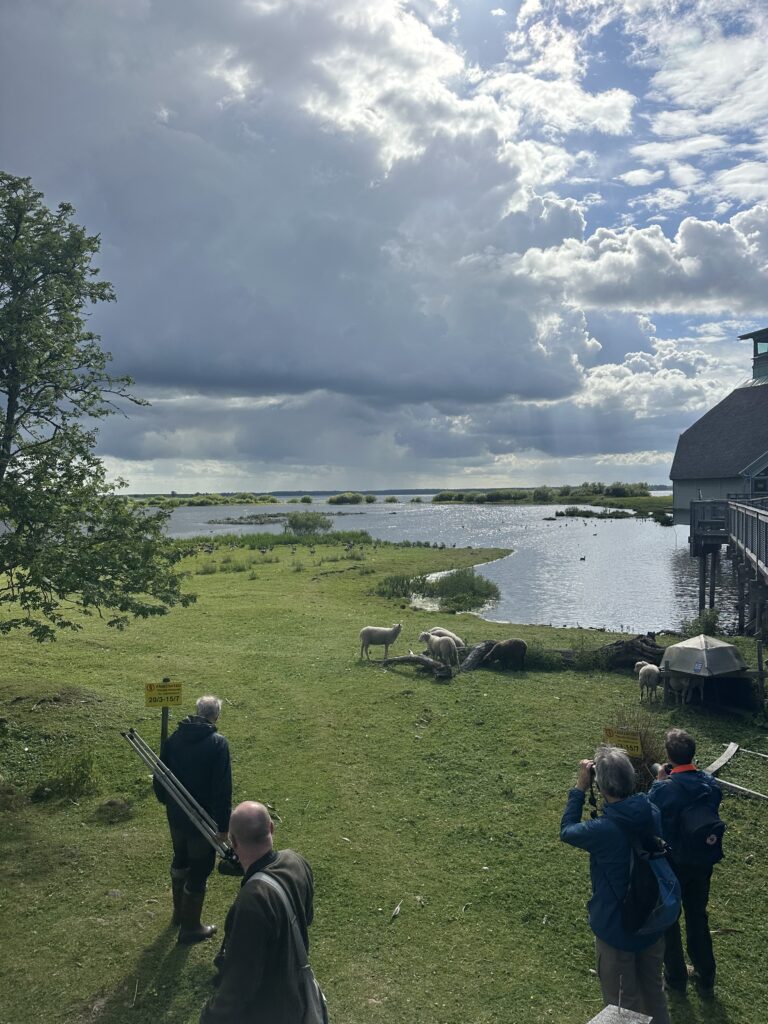
Outcomes
International Cooperation is essential in addressing issues facing migratory bird species. Geese could spend their year living across multiple countries; breeding, resting, and migrating. One country changing their approach to population management will not impact the bigger picture of geese populations and the animal’s lifecycle. This is why cross-border partnerships are essential to these conservation efforts.
The EGMP and EGM IWP proves that scientific and international cooperation can be successful, despite differing backgrounds and interests. A decade of relationship building across stakeholders has facilitated this success. These meetings are about more than geese, they work to develop new plans for conservation, sustainability, and stakeholder interests on a global scale. The EGMP has prospered for a decade because they can successfully work across borders and create solutions based on their scientific findings.