
Wetlands @ Risk – the Camargue
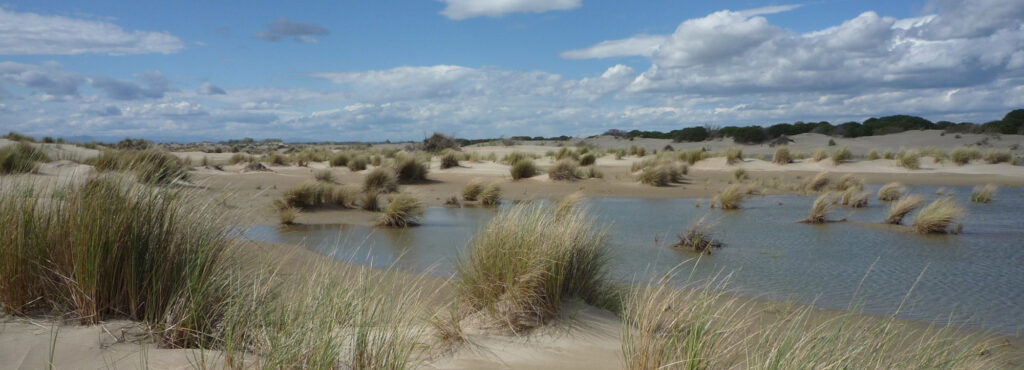
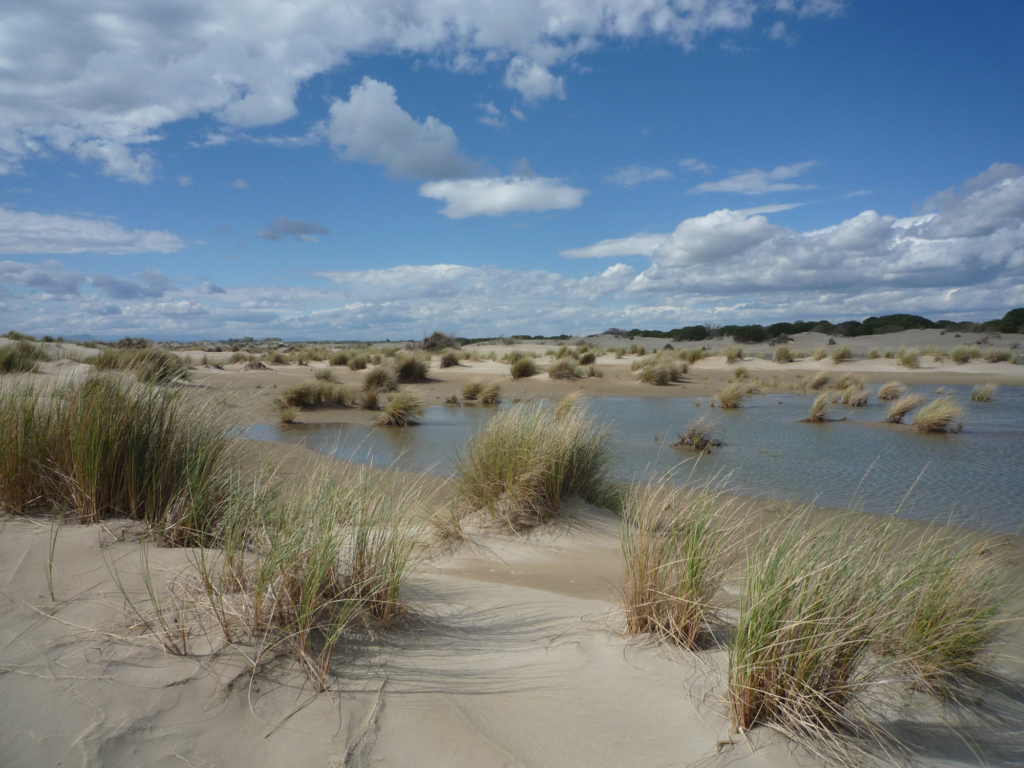
The Camargue is the largest river delta in Western Europe, and one of the most important wetlands in the Mediterranean basin due to its ecological and cultural importance. Centred on the Étang de Vaccarès, it is a patchwork of lagoons, marshes, rice fields, dunes, and reed beds. It is also home to rare peatlands, the Tourbières de Crau. Its most iconic images being that of the semi-feral horses, black bulls, and flamingos. It holds one of the densest concentrations of protection status’ in France and is home to our member, Tour du Valat.
Despite its ecological importance and protected designations, the site is now threatened by a cluster of major infrastructure projects pushed through against strong local and scientific objection, compounded by pressures from agriculture, rising sea levels, and coastal erosion.
Threats
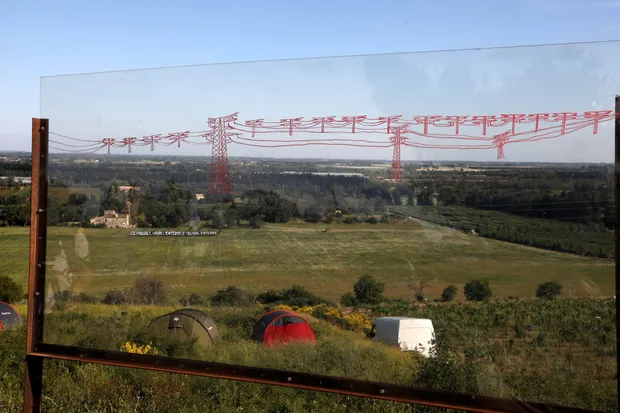
In May 2026, France’s Ministry of Energy launched the formal public-interest process for a 65km, 400,000-volt overhead powerline. This line would cut through the Camargue, the Crau plain, and the Terre d’Argence. These three areas are known by scientists and a “golden triangle” of biodiversity. Overhead powerlines are a well-known threat to large wading birds, which makes the proposed power line a cause for major concern. An underground alternative for the power lines was proposed with much public supports, but the ministry plans to proceed with the overhead option regardless.
Alongside this project sits a proposed superhighway (the Arles Motorway Bypass) affecting the rare peatlands of the Camargue. This infrastructure will cause further disruption to the species that are important to the Camargue’s ecosystem, directly opposing protections provided by its many designations.
These structural issues sit atop of long-standing, steadily rising threats. Conservationists warn all of which must be assessed cumulatively, not in isolation.
Biodiversity value
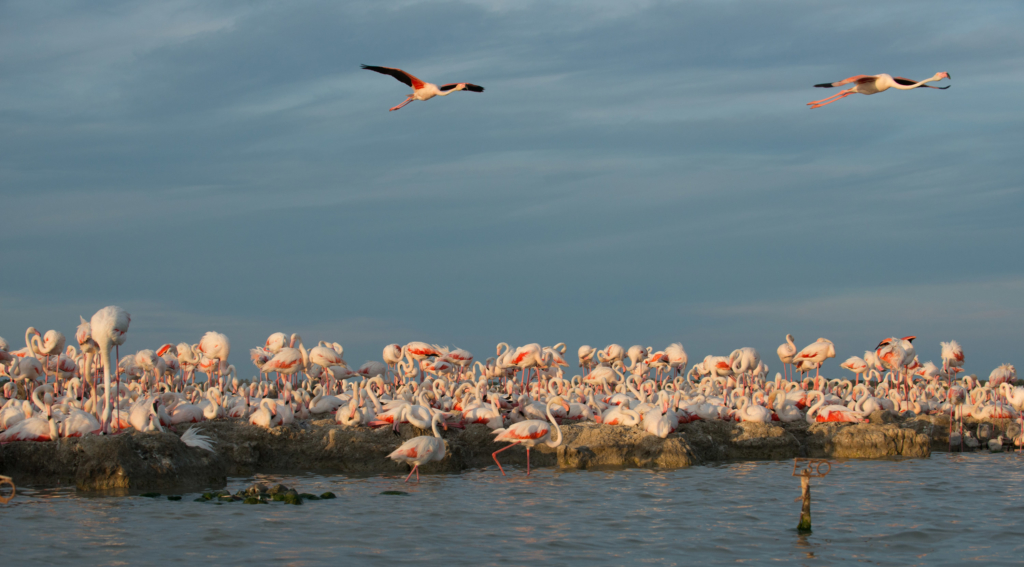
The Rhône Delta sits on a major flyway supporting bird migration, with an estimated 70-90 million birds passing through each spring, and up to 120 million in Autumn. More than 400 bird species have been recorded, with around two thirds of all species found in Europe. It is an important site for species at risk, including the Little bustard and Greater flamingos. This wetland being the only nesting site for Greater flamingos in France, and one of its largest sites in Europe, its disturbance directly threatens the future of the local population.
The Camargue hosts 103 threatened species listed on the International Union for Conservation of Nature (IUCN) European Red List. Around 126 species protected under the EU Birds Directive can be found in the ~220 000 hectares of the Camargue Natura 2000 area, including our iconic Aquatic warbler, star of the AWOM project . Adjacent to this site are a myriad of diverse Natura 2000 sites, such as the Crau and Grand Rhône marshes, the upper Rhône river or the Petite Camargue wetlands.
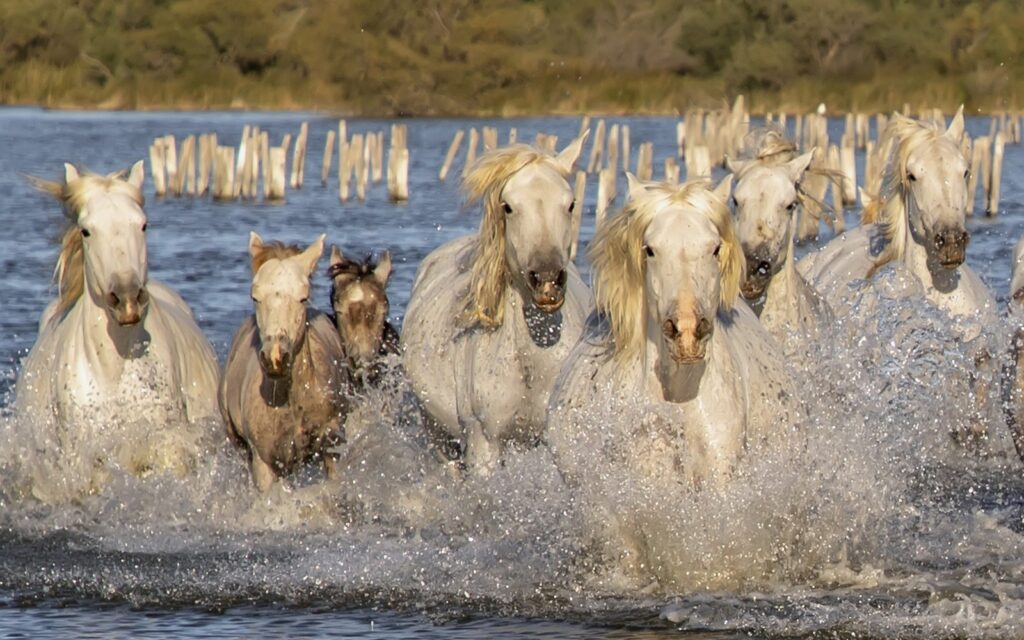
The Camargue has been designated as a Wetland of International Importance by the Ramsar Convention, partially due to its position as a migratory stopover for many bird species. The delta also supports iconic wildlife, including the semi-feral Camargue horses, a species long woven into the region’s cultural identity and traditional ways of life. It also plays a key role in the ongoing maintenance and health of the wetland.
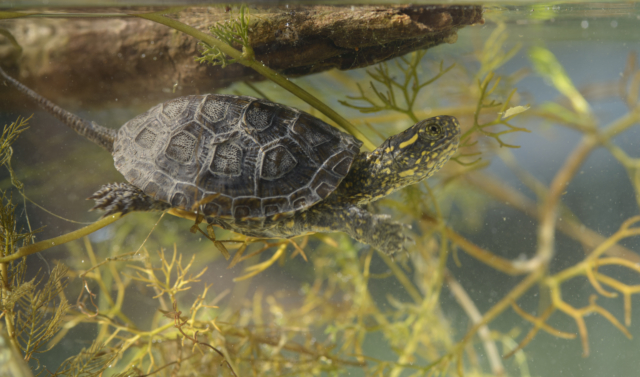
A 2019 Tour du Valat study tracking trends across eight taxonomic groups over a 40-year period (1970s-2010s) found sharp declines in amphibians, dragonflies, and orthopterans. These declines are likely linked to wetland habitant loss, and could only be worsened by the planned developments in the area.
The Camargue’s threatened peatlands are a vital ecosystem, storing carbon and preventing flooding. Tour du Valat has only recently begun mapping the peatlands, publishing their first map in 2026. Industrial developments will only further disrupt this understudied ecosystem. They have emphasised that France has a “severe lack of data” on this area, including its emissions and the carbon stored.
Biodiversity loss weakens the wetland’s core functions (water filtration, flood buffering) and its resilience to change. It is also the legal foundation of the site’s protections under multiple frameworks, meaning the government must follow due process to continue with these developments.
For the past 58 years, the Council of Europe has awarded the Camargue a European Diploma for protected areas, as a recognition of the territory’s exceptional importance in Europe for the preservation of biological, geological and landscape diversity. In its latest renewal of the Diploma, the Council of Europe clearly called onto the Camargue’s management authority to “remain very careful in relation to potential projects.” Yet, it is becoming urgent to stop the current developments to comply with EU law and bend the curve for freshwater and estuarine biodiversity.
Taking action
In May 2026, 15 major French and international environmental organisations (including our member Tour du Valat, WWF France, LPO, SNPN, and the French IUCN Committee) issued a joint public appeal to President Macron, warning of a democratic deficit in how the project was handled. The appeal calls for abandoning the overhead route in favour of the underground alternative, and for the State to formally reaffirm the Camargue’s protected status. A coalition of local elected officials, farmers, NGOs, and research bodies has aligned behind this same solution.

As of July 2026, there has been no public reversal from the Ministry of Energy, and the public interest declaration process is continuing; if confirmed, compulsory land purchase procedures could follow.
The Arles Motorway Bypass project is currently in a standstill. A French public Inquiry commission ruled an unfavourable opinion of the project, further stalling it, but not cancelling it completely. The superhighway project would disrupt the peatlands that is protected by its Natura 2000 designation, the Ramsar Convention, and opposes its protections under the Habitats Directive. Despite this, the regional prefect indicates that they still intend to follow through with this project.
Further information
Wetlands International – Camargue: a jewel under pressure
Tour du Valat – press release on the joint appeal
Advocacy: when the acceleration of projects puts wetlands under pressure