

New technology helps researchers understand Aquatic Warbler migration
-
AWOM
-
Biodiversity - Flyways
New tracking technology is giving conservationists unprecedented insights into the lives of Aquatic Warblers. Through our LIFE AWOM project, partners are using innovative new tracking systems from Cellular Tracking Technologies (CTT) to better understand the species’ migration routes, habitat use, and behaviour patterns.
For many years, tracking technology was only suitable for larger birds as ornithologists generally follow the convention that tracking devices should weigh no more than 5% of a bird’s body mass. So, for an Aquatic Warbler – which weights usually around 10 grams – there were previously no suitable tags for such a light bird.
With more advanced technologies, such as GPS, being too heavy to use, researchers were left with limited options. Geolocators, which require birds to be recaptured in order to download the data, and radio transmitters, which require field personnel equipped with a handheld antenna to locate tagged individuals.
That is now changing.
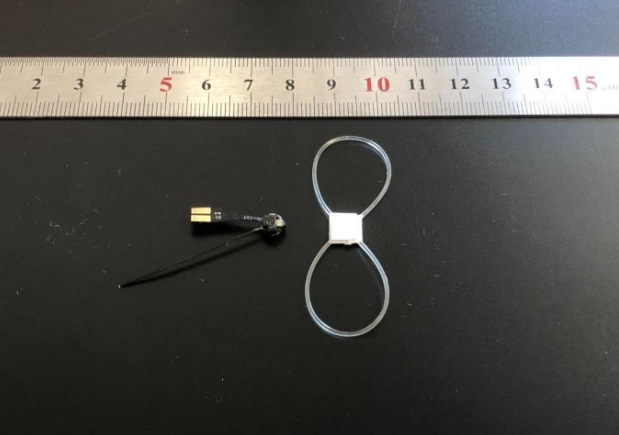
CTT has developed ultra-lightweight tracking devices, with tags weighing as little as 60 milligrams. These tags are so light that they could even be equipped on butterflies. More importantly, they are now small enough to be safely carried by Aquatic Warblers.
How does the technology work?
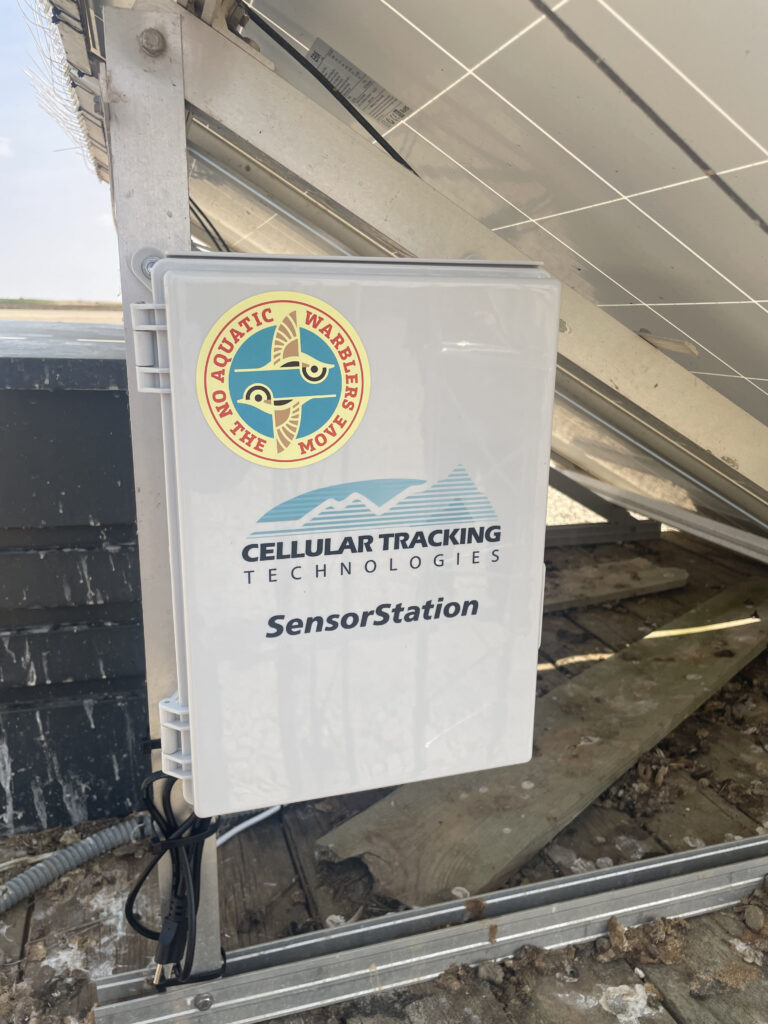
Named the BlūBat, these miniature tags are attached to an Aquatic Warbler using an elastic lightweight harness that sits around the bird’s legs, allowing the transmitter to rest on its back. Once activated, the tag then begins transmitting a radio signal that can be detected by specialised receivers placed across the LIFE AWOM project sites.
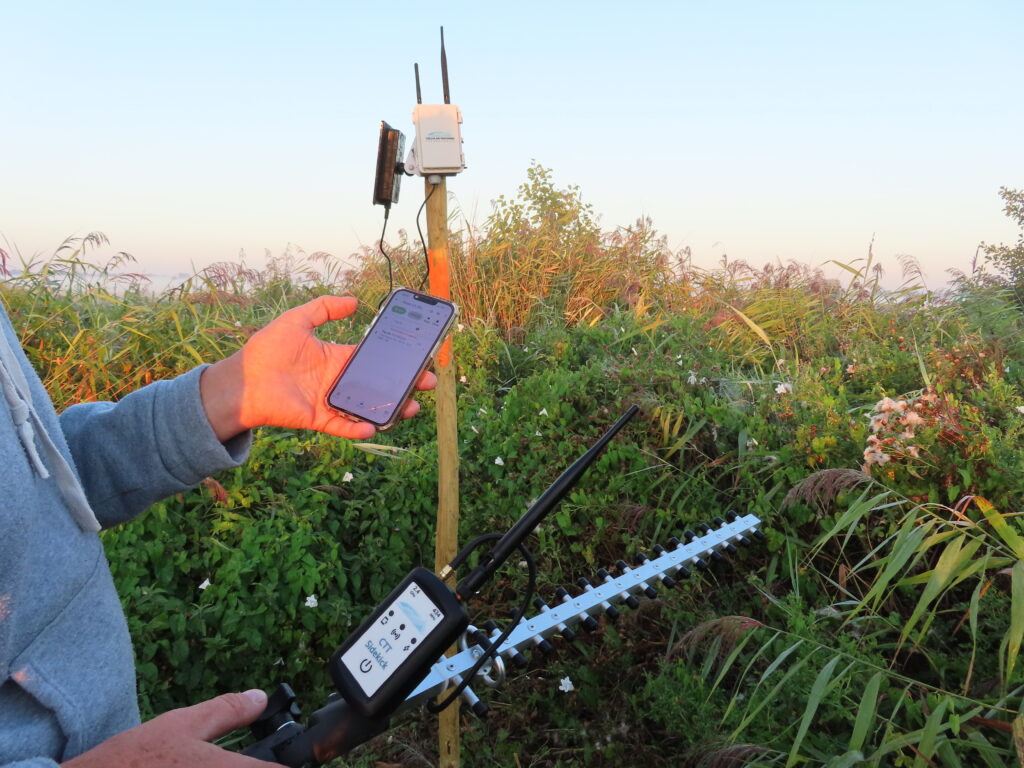
Researchers can also locate tagged birds directly using the CTT SideKick, a handheld antenna, and the CTT mobile app. This setup allows field teams to receive tag detections on their phones, making it easier to locate a bird’s exact location across project sites.
The standard version of the BlūBat tags has an estimated battery life of 135 days, allowing tagged birds to be detected in areas covered by the specialised receivers installed as part of the LIFE AWOM project.
But the newest development is CTT’s extended version, known as Blū+. These tags use LowT technology to passively detect signals from tagged individuals, making it possible to determine their location almost anywhere in the world.
Of course, using this technology comes with a trade-off: the battery life is reduced to around 40 days. This still provides enough battery life to track Aquatic Warblers during their migration journey.
Meet Han Solo
One of the most remarkable success stories from using the BlūBat tags is the documenting of an Aquatic Warbler our partners have affectionately named Han Solo.
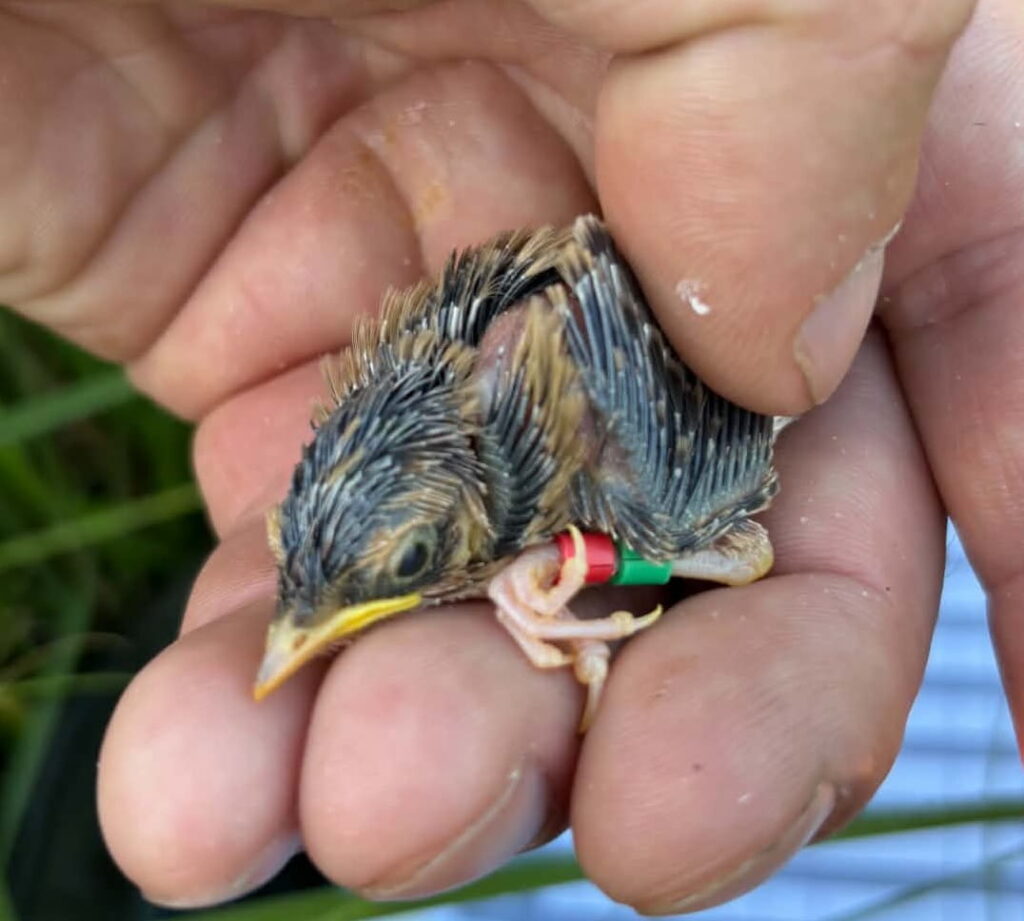
Han Solo was born in Lithuania as part of the LIFE4AquaticWarbler project, which works to strengthen Aquatic Warbler populations through translocation and conservation breeding. Ringed as a chick, Han Solo has begun his first autumn migration across Europe, undertaking a remarkable journey towards his wintering grounds in West Africa.
During his migration, Han Solo was recaptured at Camp du Hode in France, where researchers fitted him with a BlūBat tag. After spending five days resting and refueling, he continued to make his way south. Most recently detected in Spain, he is currently recovering before embarking on the last leg of his journey towards West Africa.
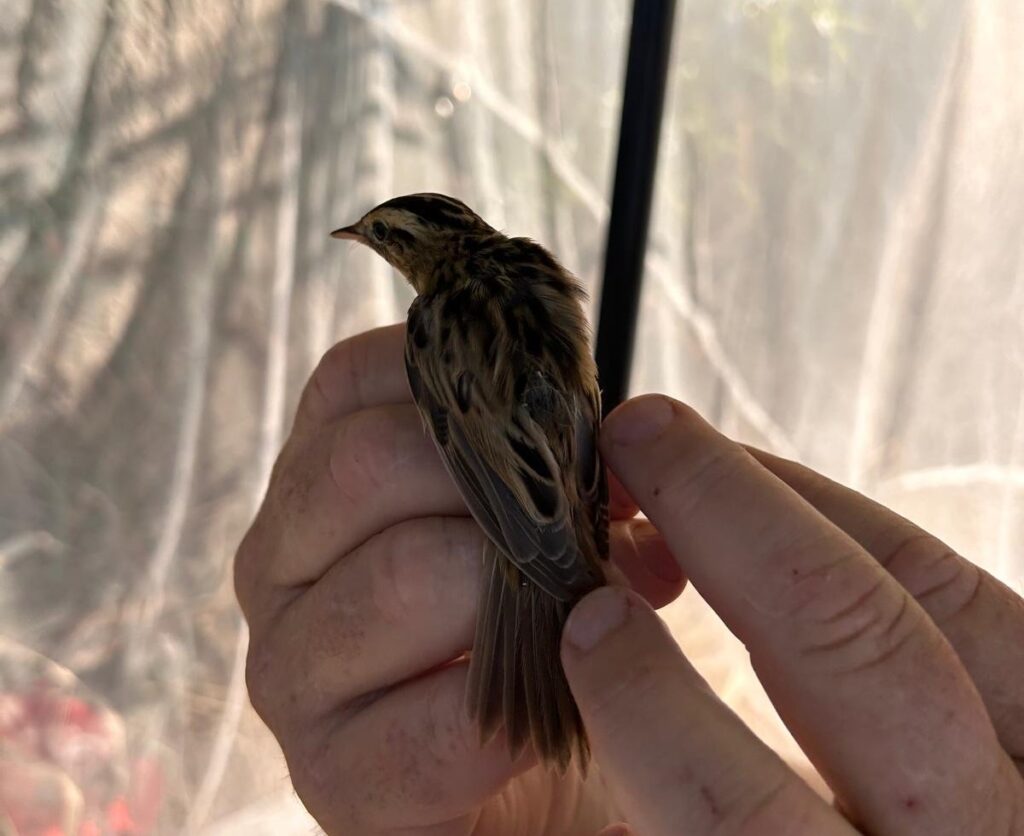
The use of BlūBat tags has provided researchers with unprecedented insight into Han Solo’s movements. For the first time not only can we see where he travels, but also how long he remains at key stopover sites and how he uses these habitats during migration. As Han Solo continues his first journey to Africa, every new detection helps improve our understanding of this threatened species and informs future conservation efforts.
This technology is already being implemented in some of our partner sites: FGN and CSIC in Spain and Groupe Ornithologique Normand in France. This groundbreaking technology is only in its second deployment across Europe. Han Solo’s journey demonstrates the enormous potential of this technology to reveal the hidden lives of Aquatic Warblers and support their conservation across the continent.
How you can help
You can play a role in conserving the Aquatic Warbler.
By enabling Bluetooth and localisation on your iPhone, you can help expand the detection network used by researchers. Participating phones can contribute to locating tagged birds by extending the reach of the monitoring system. Through your contribution, scientists could receive even more detailed information about Aquatic Warbler movements.
Every additional detection helps researchers better understand migration routes, identify important habitats, and improve conservation efforts for one of Europe’s most threatened songbirds. For now, this technology is only available on iOS devices, and we hope soon to be able to open it to Android.
Together we can help ensure a future for Aquatic Warblers like Han Solo through protecting and restoring key habitats across their migration routes