
After the United Nations Biodiversity Conference: working together for wetlands and the opportunities Wetland Partnerships can offer
-
Advocacy
-
Global Europe
Our Global Europe programme manager, Lea Appulo, has come back from the UN Convention on Biological Diversity’s COP17 in Yerevan, Armenia. She advocated to government representatives to invest in the restoration, conservation, and sustainable management of vital wetland ecosystems, showcasing the benefits of ‘wetland partnerships’ for people, biodiversity, and the economy. Follow her journey as she reflects on the discussions she had throughout the event, and what was achieved!
By Lea APPULO, Global Europe programme manager at Wetlands International Europe.
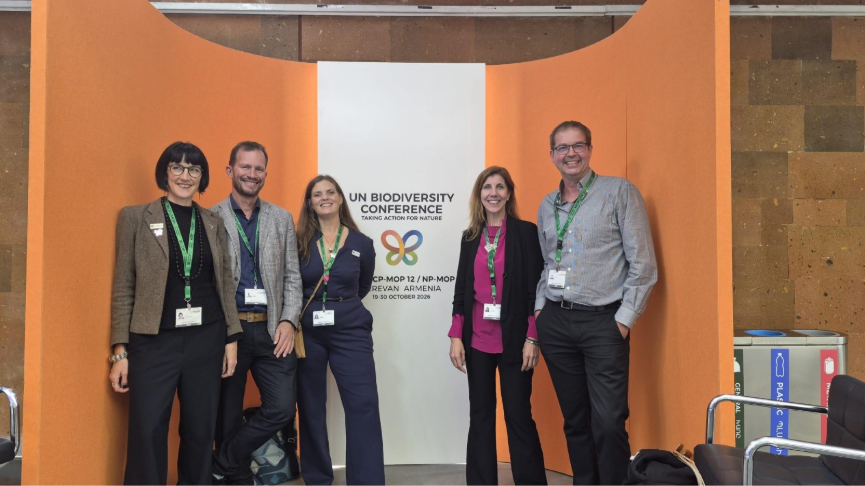
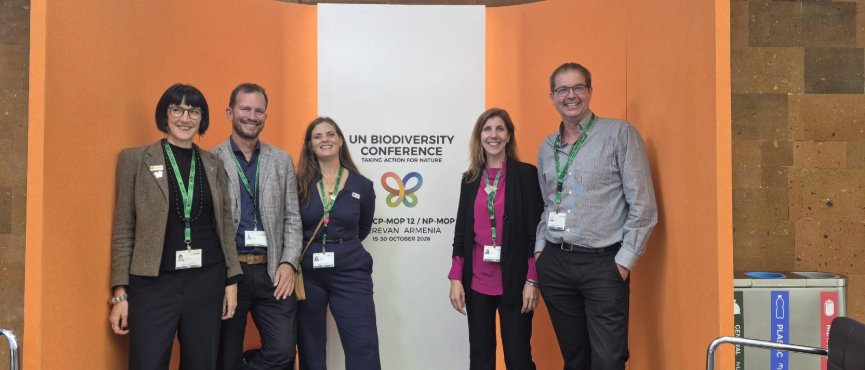
Our amazing delegation. From left to right: Laura Mackenzie, Chris Baker, Irene Kingma, me, and Richard Lee
I returned from CBD COP17 in Yerevan, encouraged by the attention given to wetlands and motivated to keep working with governments to make them a priority. Supporting the Wetlands International delegation, I exchanged ideas with governments, the European Parliament delegation, and partners about what is needed to put biodiversity commitments into practice.
Wetlands International Europe has been strongly promoting country-led Wetland Partnerships. These conversations strengthened my belief in them as a cooperation that brings governments, communities, technical organisations, and funding partners together to protect and restore wetlands, based on each country’s priorities.
For us at Wetlands International Europe, this means connecting our work in Brussels with the priorities of colleagues and partners in other countries, and helping secure political support, technical assistance, and funding through EU external cooperation.
Supporting action on inland waters
COP17 agreed to update the CBD’s Programme of Work on Inland Waters Biodiversity, which last happened in 2010! It is an outcome Wetlands International had worked hard to secure, and it offers an opportunity to strengthen action for rivers, lakes, and other inland wetlands in the delivery of the CBD’s Global Biodiversity Framework that guides contracting parties’ priorities.
Countries will need support to put the updated programme into practice. Wetland Partnerships could help identify priority ecosystems, include their protection and restoration in national plans, strengthen monitoring, and mobilise resources.
They should build on existing work and respond to needs identified by countries. The aim is to help national institutions and their partners carry agreed priorities forward, with support that lasts beyond an individual project.
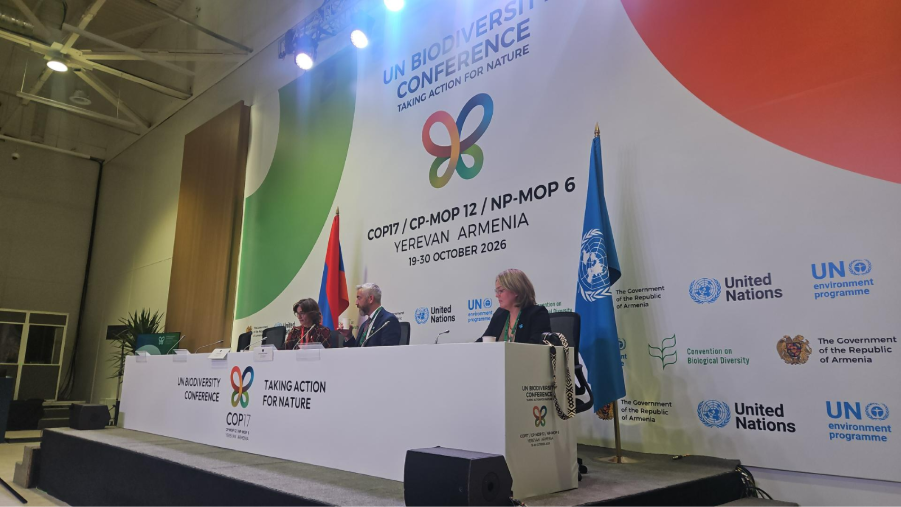
Press conference with the EU and Irish presidency
Making cooperation work within countries
The discussions on cooperation within countries were particularly relevant to wetlands. The Armenian COP Presidency called for closer cooperation on biodiversity, climate change, and land degradation, linked to national priorities.
To me, wetlands show why these matter. Restoring a floodplain can support biodiversity, reduce flood risks, and sustain farming and fishing. Protecting peatlands helps keep carbon in the ground and maintain water supplies. Healthy mangroves support fisheries and protect coastal communities. Yet the decisions affecting these ecosystems are often taken separately.
Environment ministries lead biodiversity commitments, while water, agriculture, infrastructure, and finance ministries make decisions that shape their implementation. A country-led Wetland Partnership could bring these authorities together with communities and other partners around a particular ecosystem or river basin.
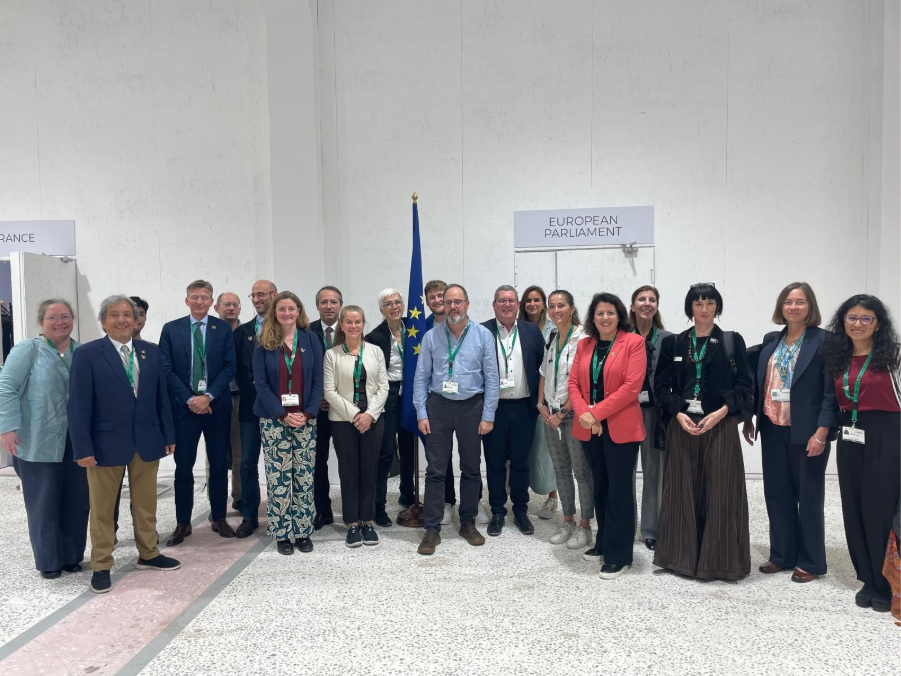
Me with the European Parliament delegation
Connecting mountains and freshwater ecosystems
The new Yerevan platform on mountains and related freshwater ecosystems, led by Armenia in partnership with the United Nations Environment Programme (UNEP), provides another opportunity. It aims to bring mountain and downstream countries together and connect their needs with expertise, funding, and practical support.
Mountain ecosystems, rivers, lakes, and other wetlands are connected. Changes in water use, infrastructure, or land management upstream can affect ecosystems and livelihoods far downstream.
This connects with our work at Wetlands International Europe on natural sponges, which promotes the restoration of wetlands and water retention in upper catchments to slow runoff, reduce flood risks, and improve water availability during dry periods. This experience could contribute to the Yerevan Platform through exchanges on restoring the landscapes that supply water downstream.
Wetland Partnerships could help organise this cooperation, including across borders, and connect national priorities with the Yerevan Platform, the Freshwater Challenge, and other relevant initiatives.
After Yerevan, I look forward to continuing these conversations with colleagues, governments, and partners interested in developing country-led Wetland partnerships and agreeing together where we can start.