
Protecting Aquatic Warblers: a new wintering site discovered in Senegal
-
AWOM
-
Biodiversity - Flyways
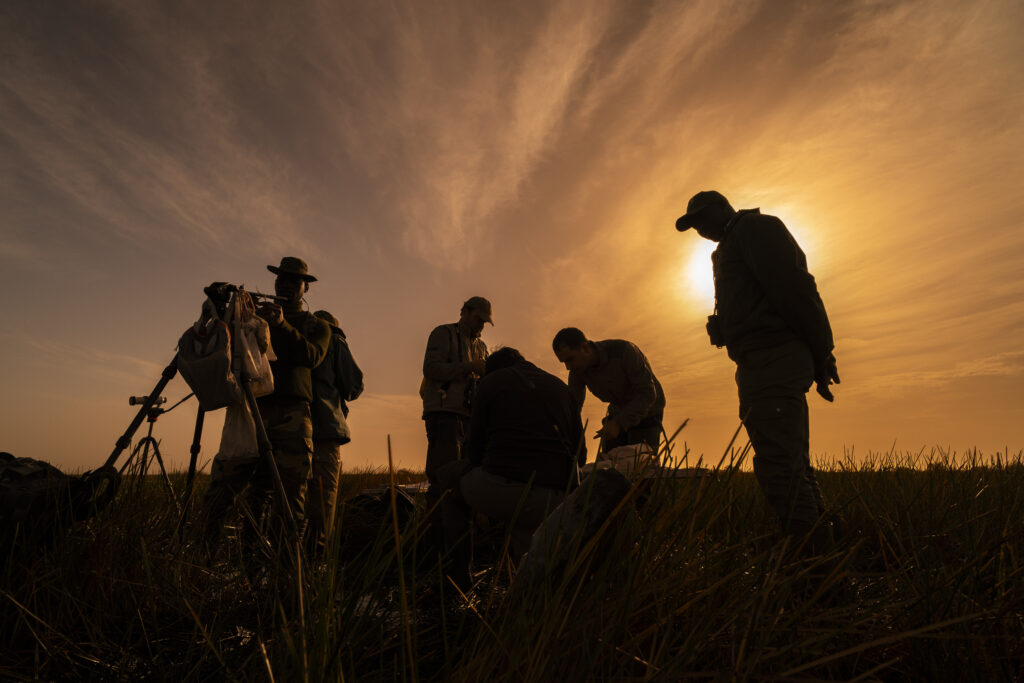
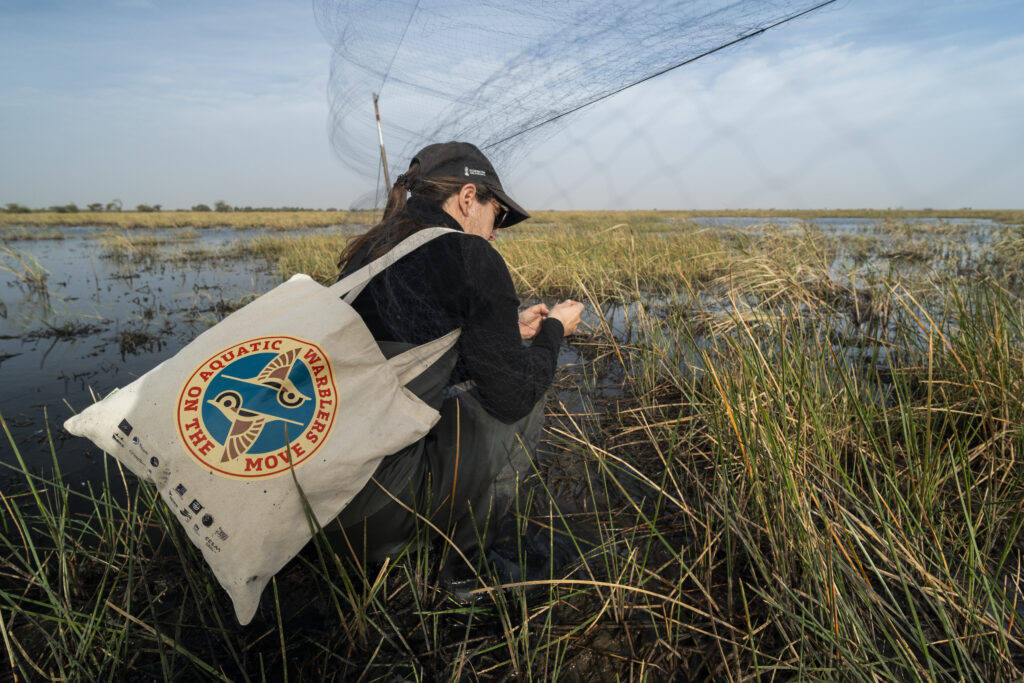
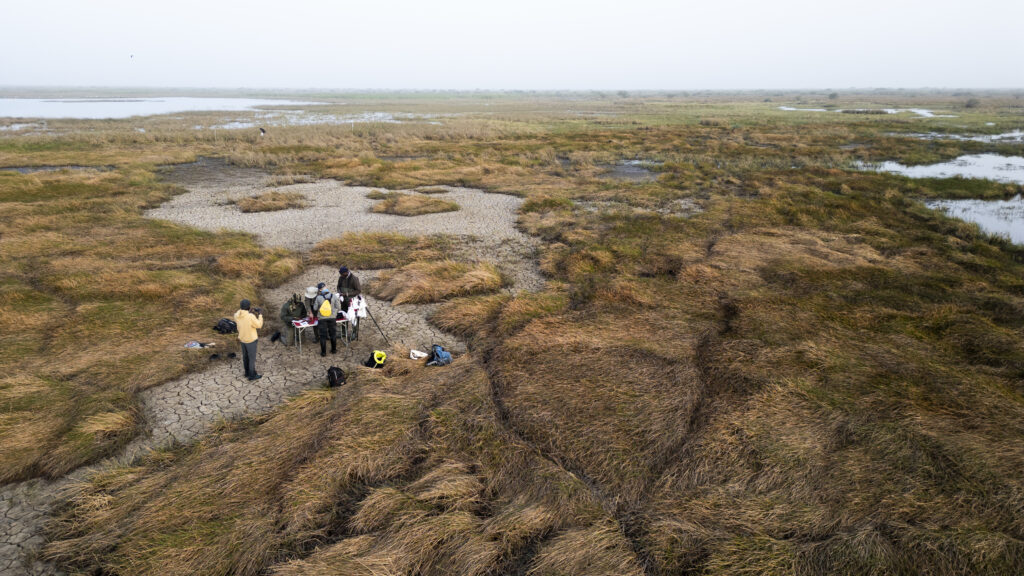
Several members from the LIFE AWOM project (Aquatic Warblers on the Move) recently came back from a gap-filling survey mission in Senegal, at one of the most important wintering sites for the Aquatic Warbler, a migratory bird that has lost 95% of its population. The team captured the first Aquatic Warbler ever, despite previous expeditions, in the Ndiael Nature Reserve, confirming the importance of this site for the species.
The discovery of this new wintering site for the Aquatic Warbler multiplies the conservation possibilities for a species classified as Vulnerable in Europe and globally. Today, the Aquatic Warbler is the most endangered passerine bird in Continental Europe. Its breeding areas are already well protected and actively managed – notably by the LIFE4AquaticWarbler project – in Poland, Lithuania, Ukraine, Belarus, Germany and Hungary. But the survival of the species also depends largely on the non-breeding season, while birds are migrating to West Africa. The LIFE AWOM project focuses on restoring the wetlands where the species rests and feeds during its migration; places also called wintering areas.
These areas in Africa were completely unknown until 2007. Intensive surveys and geolocator studies over the last twenty years revealed important wintering locations, notably in the Inner Niger Delta, Mali, and in the Djoudj National Park in Senegal. But here’s the challenge when it comes to the Aquatic Warbler: the geolocators that can be fitted on such a small bird are not accurate to pinpoint their location with high accuracy.
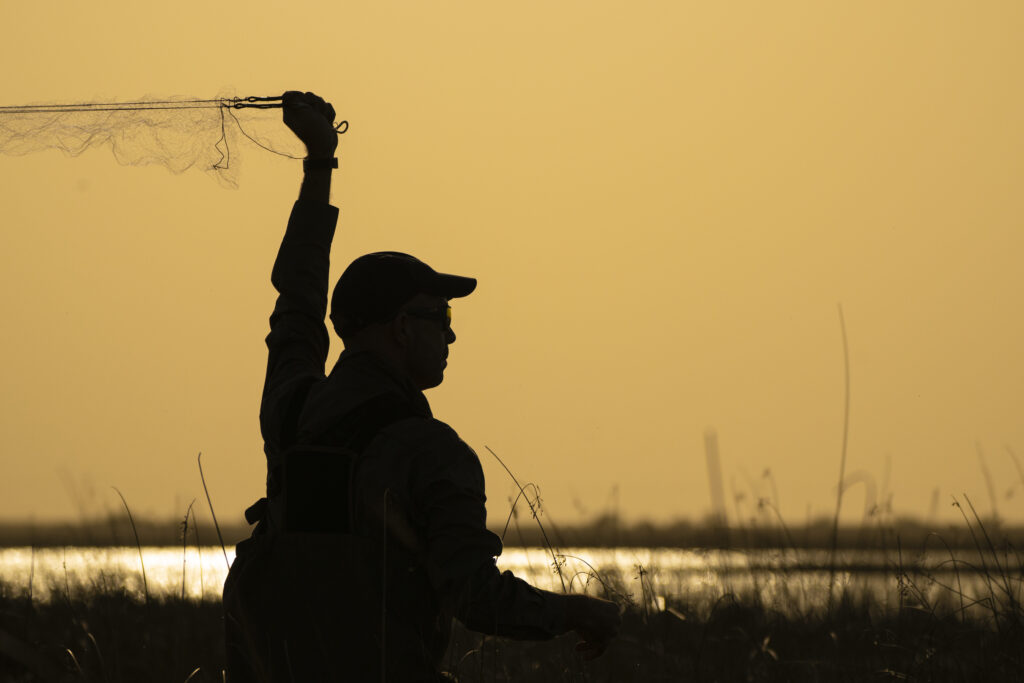
That is why further research on the field is needed in West Africa, to analyse more in depth suitable habitats and confirm the presence of the species. It is with these objectives in mind that the LIFE AWOM project is conducting gap-filling surveys. Such expeditions are like finding the needle in a haystack, but informed by careful preparations.
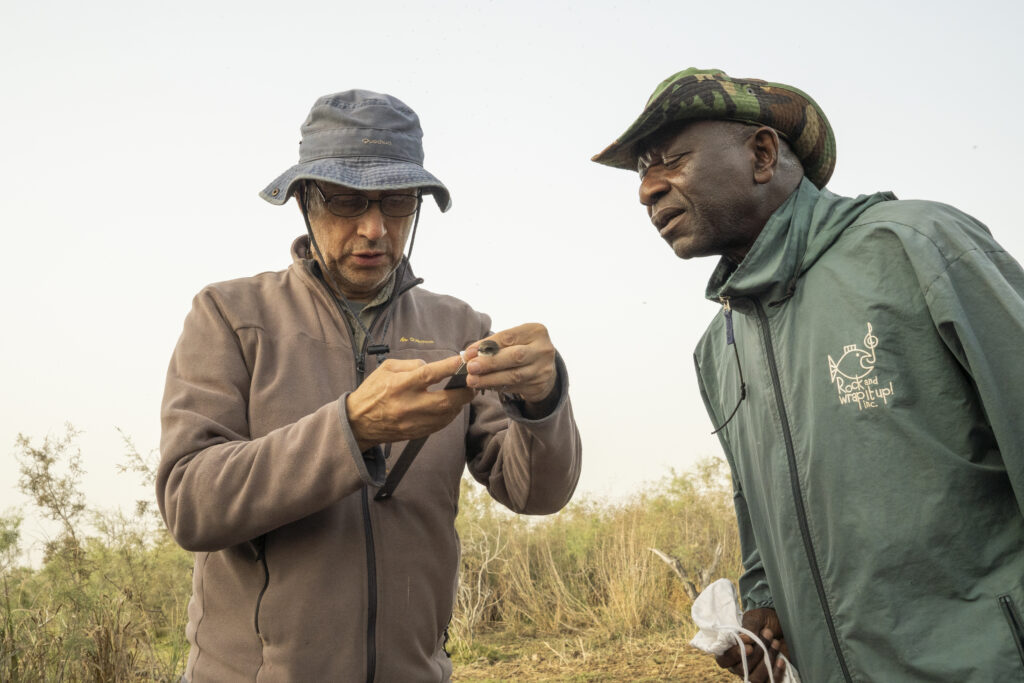
These surveys are essential to helping us locate and monitor areas where this vulnerable species may still be present, and to share knowledge with local ringers. The Aquatic Warbler is an extraordinary migratory bird, weighing approximately 14 grams (the equivalent of a tea-spoon) and flying more than 6,000 kilometres from Eastern Europe to West-Africa twice a year. Most of the species’ records done during the wintering period, December and January, are concentrated solely in the Niger River delta in Mali and in the Djoudj National Park in Senegal.
Our gap filling survey conducted early February 2026 included experts from Fundación Global Nature, Fundación Migres, the Doñana Biological Station (CSIC), the Catalan Institute of Ornithology (ICO), the Acrola Association and Wetlands International Africa. It focused on checking the status of Aquatic Warblers at the Djoudj National Park, but also analysing other areas such as the Ndiael Nature Reserve, 40 kilometres away.
The discovery of this new wintering site is a historical step: it greatly increases the chances of conserving this species, as stated by David Miguélez, wetland specialist at Fundación Global Nature: “One of the main problems detected in this region is the rapid expansion of rice cultivation around the wetlands. We are in a race against time. Rice crops are rapidly encroaching on these wetlands, diverting water, contaminating with pesticides and destroying the invertebrates that the Aquatic Warbler feeds on. This discovery allows us to act before it is too late: we will strengthen surveillance, improve water management and halt habitat degradation in this new site.“
In 2014 and 2015, the hydrology of the Ndiael Nature Reserve has been restored with the help of Wetlands International, and it was a promising candidate for our gap-filling survey. Efforts were rewarded with the capture of an Aquatic Warbler, confirming the presence of the species at this area, which can trigger further conservation actions. The ringing team also recorded six Aquatic Warblers in the Djoudj National Park.
LIFE AWOM, an international alliance
This mission is part of the LIFE AWOM project, which is coordinated by Wetlands International Europe and brings together 14 organisations from Europe and Africa, aiming to restore up to 20 wetlands sites where the Aquatic Warbler stays to rest and feed during its migration.
Alongside the “LIFE4AquaticWarbler“, which focuses on the breeding countries, these two projects form the largest coordinated effort ever undertaken for the conservation of the Aquatic Warbler.