

Wetlands for the future: two EU projects gathered policy and practice in Brussels
-
Advocacy
-
Nature based solutions
-
Peatlands
As Europe faces increasingly severe droughts, floods, water scarcity and biodiversity loss, protecting and restoring wetlands is becoming ever more important for building resilient landscapes and communities. After more than four years of research across Europe, the EU-funded ALFAwetlands and REWET Horizon Europe projects are bringing together new evidence, tools and practical experience to support the conservation and restoration of wetlands, and have presented them on the joint final conference, “Wetland solutions for the future: learning from ALFAwetlands and REWET projects,” on 17 September 2026 in Brussels, Belgium.
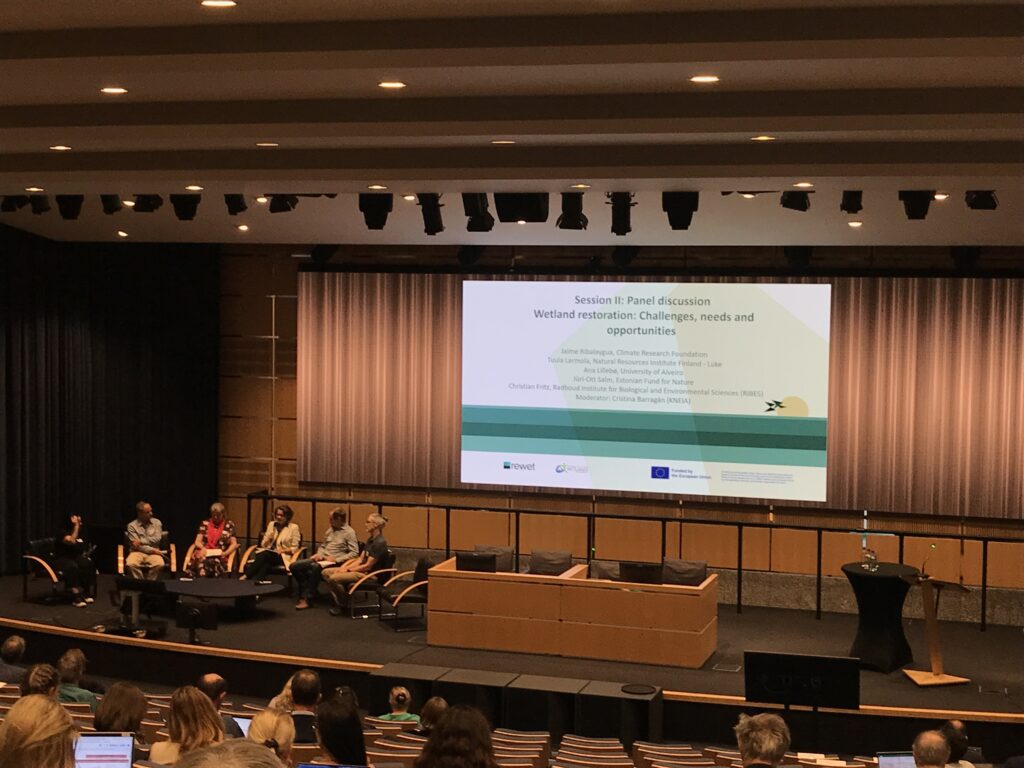
Projects´ findings come at a critical moment for European environmental policy, as countries move from setting restoration objectives towards implementing the EU Nature Restoration Regulation, while the European Water Resilience Strategy has placed greater emphasis on restoring the natural water cycle and strengthening Europe’s resilience to water-related risks. Wetlands store water, regulate flows, support biodiversity and contribute to climate mitigation and adaptation. Yet many of Europe’s wetlands have been lost or degraded through drainage, land-use change and other pressures, reducing their capacity to provide these essential functions precisely when Europe needs them most.
The conference brought together more than 110 in-person and online policy makers, researchers, wetland restoration practitioners and other stakeholders from across Europe to present the projects’ main results and discuss how scientific knowledge and practical restoration experience can support the future of European wetlands.
The conference was officially opened with a keynote speaker Zoltán Rakonczay, Policy Officer at the European Commission’s Directorate-General for Research and Innovation, setting the scene for discussions on wetland restoration and its role in Europe’s research and policy landscape.
From four years of research to practical wetland solutions
Wetlands are essential for climate regulation, biodiversity, water management and resilient landscapes, yet many European wetlands remain degraded by drainage, landuse change and other pressures.
ALFAwetlands and REWET have approached these challenges from complementary perspectives, combining research, monitoring, modelling, restoration experiments, stakeholder engagement and policy advocacy. The Final Conference showcased key scientific findings, innovations and policy relevant results developed by the two projects.
Among other, the event included expert panel discussion; co-creation guidelines training and best practices for wetland restoration workshop. Participants also discussed how the knowledge, tools and approaches developed during ALFAwetlands and REWET can continue to support effective and evidence based wetland restoration across Europe.
Connecting science and policy
A particular focus of the conference was on translating research into action. ALFAwetlands has worked to improve the European geospatial knowledge base on wetlands, assess different restoration pathways and their climate, biodiversity, ecosystem service, social and economic implications, and develop restoration approaches through Living Labs and co-creation with stakeholders.
REWET has focused on facilitating sustainable restoration and conservation of terrestrial wetlands, including floodplains, and on understanding how wetland restoration and management can maximise carbon uptake while respecting natural processes and biodiversity.
Together, the projects provide complementary evidence, tools and practical experience that can contribute to the implementation of European climate and biodiversity ambitions and support the transition from restoration targets to effective action on the ground.
During the conference the recently developed joint white paper “Prioritising Wetland Conservation and Restoration in Europe – United voices for more policy impact” was presented, bringing together evidence and experience from seven EUfunded wetland projects and identifies 4 policy priorities for accelerating wetland conservation and restoration. Additional policy recommendations have been outlined in the latest ALFAwetlands Policy Brief “Rewetting for Resilience”, which was
also presented at the conference.
“The Policy Brief shows, how rewetting agriculturally used peatlands delivers exceptional climate benefits as well as biodiversity recovery and how paludiculture could transform restoration economics into viable business opportunities aligned with EU climate neutrality”, says Marie Lorenz from Michael Succow Foundation.
From conference room to wetland: visiting the Dijle Valley Living Lab
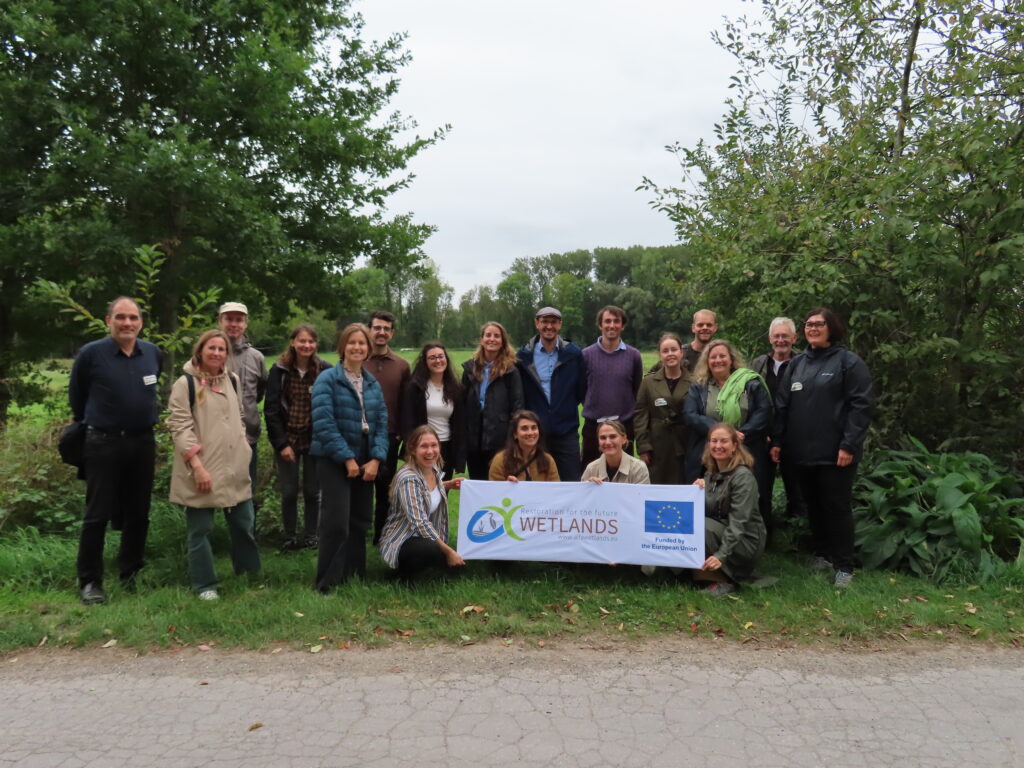
An important complement to the discussions in Brussels was a field visit to the ALFAwetlands Dijle Valley Living Lab in Belgium, which brought together representatives from the European Commission, CINEA, UNEP, researchers and CSOs of various countries as well as local stakeholders.
Thanks to the comprehensive explanations provided by the site managers (Vrienden van Heverleebos
en Meerdaalwoud), the participants gained a detailed overview of the restoration measures and site
management carried out at Doode Bemde. Further insights into scientific research and monitoring carried out as part of the ALFAwetlands project were provided by the Flemish Research Institute for Nature & Forest (INBO).
A joint legacy for European wetland restoration
The Final Conference marked an important milestone for both ALFAwetlands and REWET but also provides an opportunity to look forward. Knowledge generated by the projects, including scientific evidence, monitoring approaches, models, restoration experiences, stakeholder engagement methods, policy recommendations and openly available resources, can continue to support researchers, authorities, land managers and practitioners beyond the projects’ lifetime.
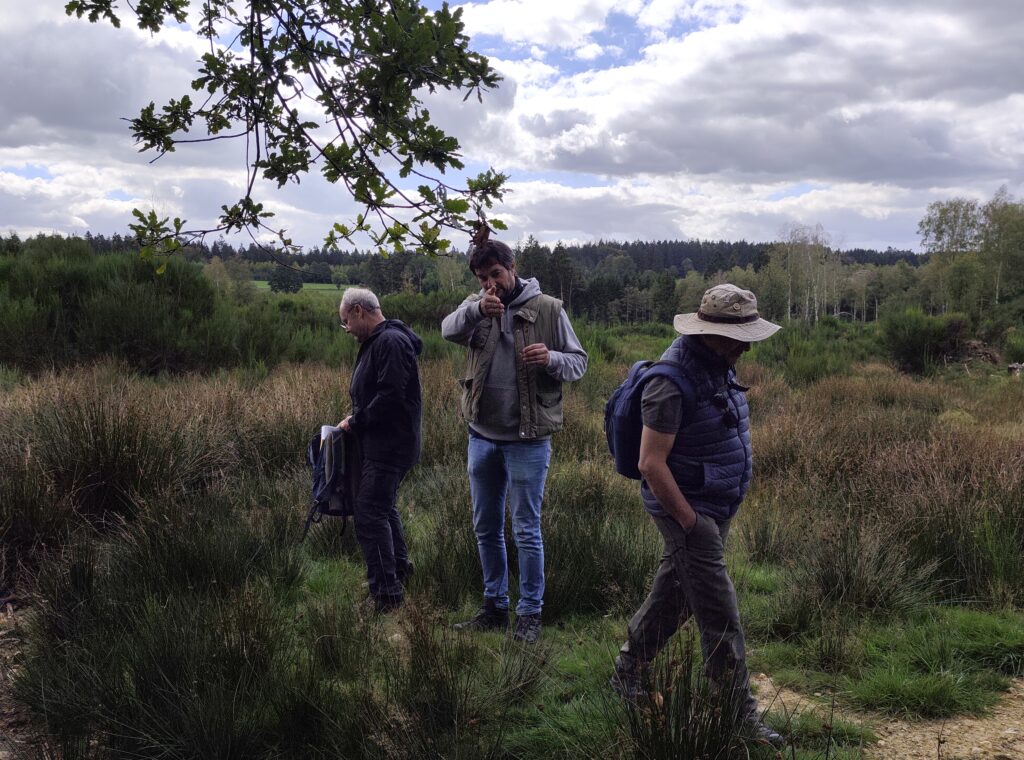
The joint event encouraged new partnerships and continued exchange across the European wetland restoration community.
By bringing together scientific knowledge, practical experience and policy perspectives, ALFAwetlands and REWET aim to help strengthen the bridge between wetland research and restoration implementation and contribute to healthier, more resilient European landscapes.