What a week in Bonn taught me about waterbirds and their community
-
Biodiversity - Flyways
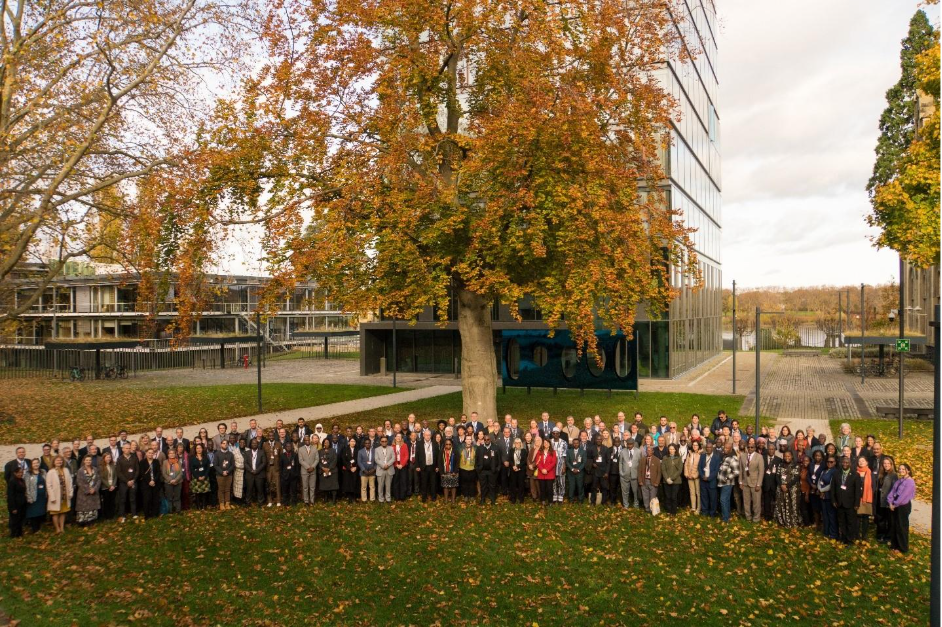
“Behind every handshake and every conversation were individuals dedicating their lives to the protection of migratory waterbirds.” Follow the journey of Luca Guitink, our Biodiversity technical officer, while she participated in a three-days conference in Bonn, Germany, for the African-Eurasian Migratory Waterbird Agreement’s 9th Meeting of the Parties.
Bonn, Germany, day one
The first day in Bonn began bright and early. Over coffee and breakfast at the hotel, we were already bumping into familiar faces: colleagues, partners, and old friends also attending this gathering of birds’ experts and enthusiasts. I quickly discovered the waterbird conservation world is a small and remarkably tight knit one; people stay for years, sometimes decades, and the connections built along the way make every meeting feel a bit like a reunion. Armed with more than 10kg of badges and pins celebrating the 60th anniversary of the International Waterbird Census (IWC60), we set off for this German UN Campus for the opening of the African-Eurasian Migratory Waterbird Agreement’s 9th Meeting of the Parties (AEWA MOP9).
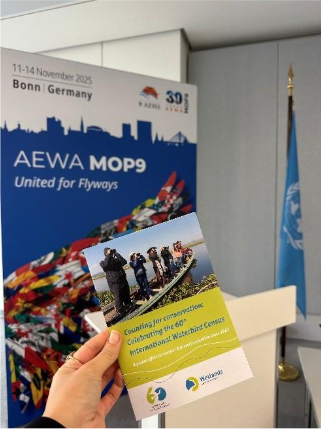
While often considered a series of formalities, as a first-timer, the opening statements set a powerful tone. Representatives from across the African-Eurasian Migratory Waterbird Agreement (AEWA) countries spoke with passion and urgency, reaffirming the need to protect our shared migratory species, despite the challenges AEWA faces. Colleagues from Wetlands International and BirdLife International delivered a joint opening statement which resonated deeply: we believe in AEWA.
Throughout the day, our biodiversity Manager, Szabolcs Nagy, gave two valuable presentations. The first marked the important launch of the 9th edition of the Conservation Status Report (CSR9), a proud moment for our team! After more than a year of analysis, discussions and revisions, it was rewarding to finally present the result of such a collaborative effort. His second presentation, on waterbird monitoring, was a reminder that behind every dataset lies countless early mornings in wetlands and the dedication of volunteers whose quiet efforts keep conservation alive. Reminding all that the best way to thank and encourage this continued effort is to use this valuable monitoring data.

We concluded this first day with the 30th Anniversary celebration of the AEWA. Among the keynote speakers was Mary Colwell, whose presentation reminded us all the emotional heart of conservation. She spoke about the extinction of the Slender-billed Curlew, “the bird without a story”, a haunting reminder of what can happen when we fail to make noise and connect emotionally to the species we seek to protect.
‘A polar bear standing on thin ice says more about climate change than a graph of CO₂ emissions, a quote that stayed with me for the rest of the day.
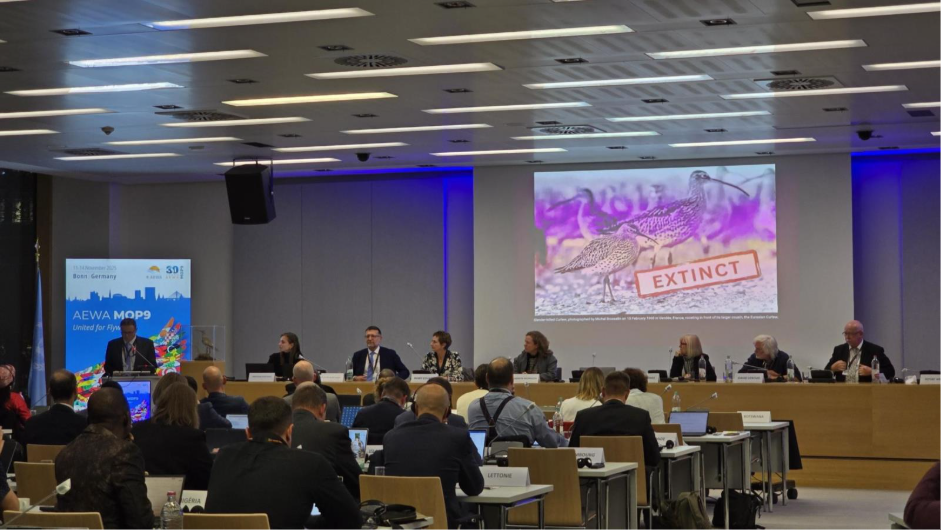
The emotional plea to conservation was followed by a presentation by Kerryn Morrison, who shared a moving success story about the Grey Crowned Crane, outlining how conservation rooted in communities can uplift and benefit both people and wildlife. It was a hopeful reminder that our efforts are not in vain, and conservation work can truly evoke change.
Bonn, Germany, day two: inside the technical working group
Day two took us deep into the technical engine room of AEWA. Much of the day was spent in working group discussions focused on proposed amendments to the Draft Resolutions of the African Eurasian Waterbird Agreement. As Wetlands International was part of the technical working group, I had a front-row seat to the complexity behind these draft resolution amendment negotiations. It was fascinating to watch how proposals are reviewed, debated, and adjusted, sometimes word by word. Since AEWA Resolutions are legally binding for its constituents, the precision of language matters. Even a tiny shift – something as simple as changing an “and” to an “or” – occasionally sparked more discussion than an entirely new operational paragraph.

It was a reminder that conservation agreements rest not only on passion, but also on the careful crafting of language that will legally guide conservation action for years to come. Today, the coffee and lunch breaks took on a new strategic meaning. Instead of casual conversations, they became extensions of the negotiation table. Delegates huddled over laptops, comparing notes, clarifying positions, and trying to resolve sticking points in various draft resolutions. It reinforced something I’ve heard repeatedly this week: sometimes, the most important decisions are made just outside the formal meeting rooms.
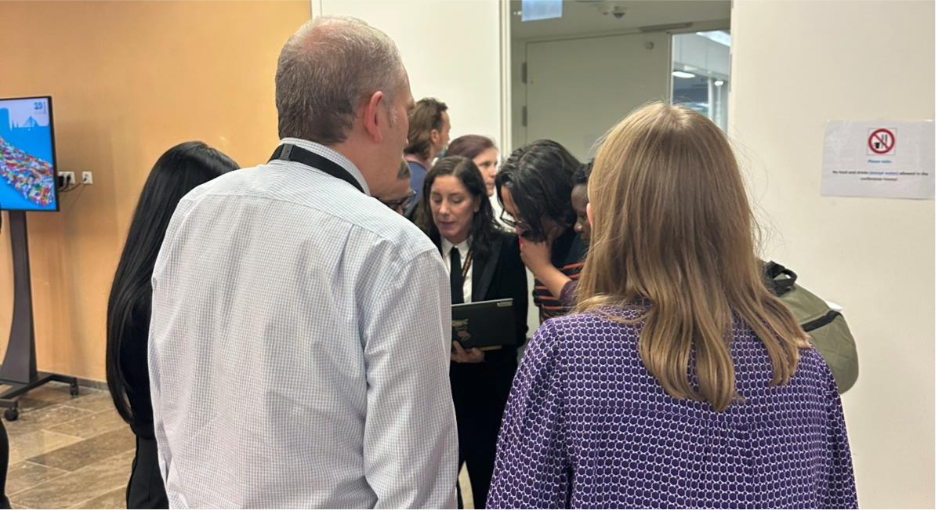
Day two of the AEWA MOP offered a different kind of insight: into the deliberate, and deeply collaborative process that shapes international conservation policy. Watching it unfold gave me a newfound appreciation for the thorough work that turns good intentions into actionable commitments.
Day three: side events and celebrating 60 years of the International Waterbird Census
Day three at AEWA MOP9 was dedicated to side events, making it one of the most dynamic and engaging days of the meeting. We settled into a full schedule of sessions that highlighted just how interconnected and coordinated migratory waterbird conservation work is across the AEWA region.
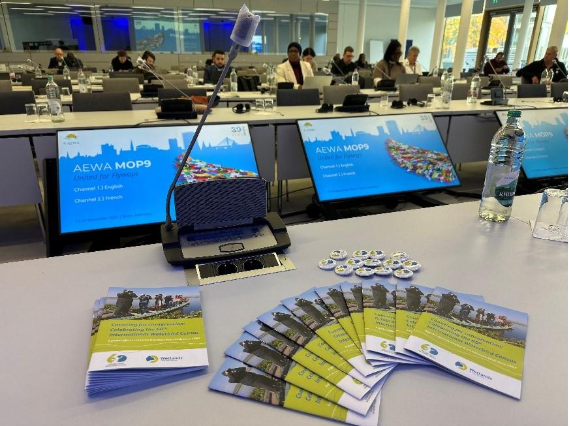
The highlight of the day for us was our own side event celebrating 60 years of the International Waterbird Census (IWC) which was led by my colleagues from Wetlands International, Szabolcs Nagy and Tom Langendoen. With contributions from long-standing partners, Abdolaye N’Diaye, Laura Dami, Khaled Etayeb, and Marc van Roomen, this side event traced the history, importance, and continued evolution of the IWC. Speakers emphasised the IWC’s role as a global early-warning mechanism, the value of sustained national coordination, and the importance of robust population estimates for tools such as the Ramsar 1% criterion. We also announced the donation of 40 pairs of second-hand binoculars from Vogelbescherming Netherlands to further support counters in participating countries! An example of practical support to encourage and strengthen monitoring efforts.
We ended the day with a reception hosted by Denmark, as the current EU Presidency, which offered yet another excellent opportunity for deeper conversations. One of the discussions revolved around the proposed reintroduction of the Dalmatian Pelican to the Netherlands – raising questions about the ethical and practical implications of reintroductions, whether such funding could be better spent on other conservation priorities (even if we had a say in it), and how to balance cost with the potential long-term ecological benefits.
It was fascinating to explore these differing viewpoints, especially considering that future habitat models suggest the species could thrive again in parts of its former range.
Bonn, Germany, day four: final day
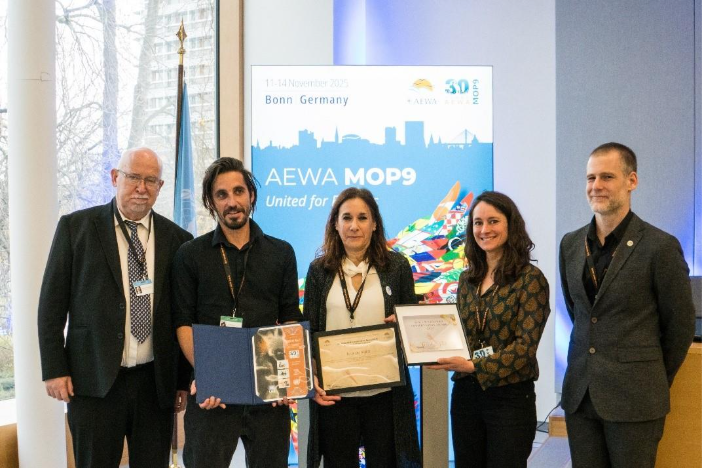
The final day of AEWA MOP9 began with plenary sessions to adopt the final resolutions. While our own work was completed (as observers, we do not take part in the voting), it was interesting to watch the resolutions being officially adopted one by one. We were incredibly proud to see our member organisation, Tour du Valat, receive the AEWA Conservation Award 2025 in the Institutional category. As highlighted during the ceremony, the award recognises their exceptional, long-term contribution to waterbird and wetland conservation in the Mediterranean – from pioneering research and habitat restoration to sustainable wetland management and deep engagement with local communities and international networks.
The closing ceremony followed shortly after – a moment of both celebration and farewell. Saying goodbye to the many new faces I had met throughout the week was bittersweet. Behind every handshake and every conversation were individuals dedicating their lives to the protection of migratory waterbirds. Seeing the people behind the projects and policies added depth and humanity to this field that I will carry with me.
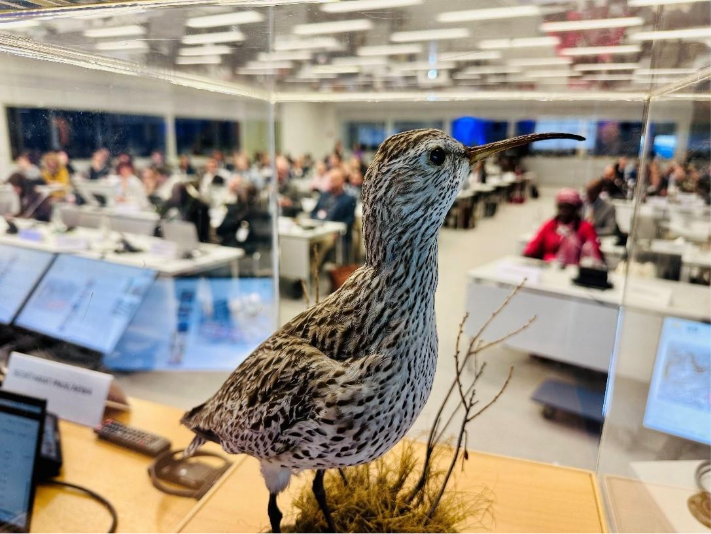
As I reflect on the week, I realise how this conference has affected my perspective on waterbird conservation. I leave Bonn with a deeper understanding of the diverse projects across the African–Eurasian flyway – and, more importantly, how interconnected these efforts truly are. Each initiative strengthens the others, forming a network of conservation action far larger than any single organisation. The week also reinforced that our efforts matter. In a field where progress can feel slow and challenges immense, MOP9 was a reminder that hard work is not futile. There are tangible successes, inspiring commitments, and countless individuals fighting tirelessly for the same cause. The extinction of the Slender-billed Curlew remains a stark reminder of what is at stake when we lose momentum. It reinforces that the battle is far from over – and that our collective determination must remain steady.
As I packed my bags to leave Bonn, I felt a renewed sense of motivation. AEWA MOP9 was not just a meeting; it was a reminder of why we do this work, and of the global community standing behind every effort to protect migratory waterbirds and the wetlands they depend on.
Luca Guitink